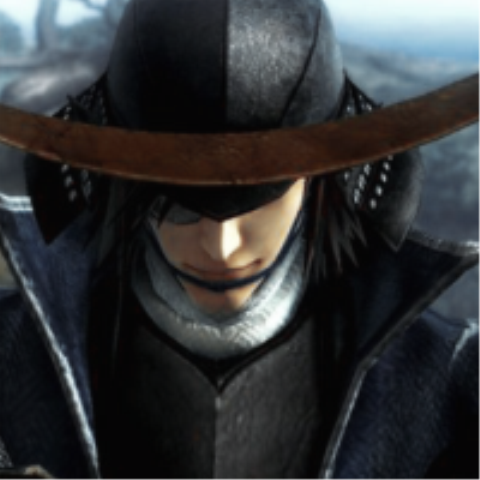
Although, the overall package of the game is good. The game’s design philosophy didn’t align with what I was expecting. This is especially true of the main campaign, which seemed to aim for a sense of adversity and challenge but instead we got DMC4’s homework copy. It makes a strong first impression, but as you progress, you’re left wanting more.
Understanding the philosophy
In a generation full of demands, microtransactions, and endless complaints, making a good action game is a difficult task. Ninja Gaiden 4 like most modern games has the fans split apart. There are people who welcomed the change but some did not. In my case, its a mixed bag.
What I hoped with NG4 was a return to the sandbox-style level design seen in the first 3D Ninja Gaiden Tairon, especially since the story takes place within a single city. This was a moment where developers could create interconnected world. but of course the developer had a different plan, focusing instead on the concept of “Endless Adversity” and a more linear experience and such.
Gameplay Engagement demand
The Tokyo arc starts off strong. From the moment you select New Game, you’re thrown straight into the action without a lengthy introduction, which immediately sets a great pace. By the end of Tokyo arc, you will notice a repetitive pattern where Many stages are padded with auto-scrolling set pieces such as rail grinding, flying, surfing and other scripted movement. This is very typical of Platinum Games and I wish it’s something that they let it go.
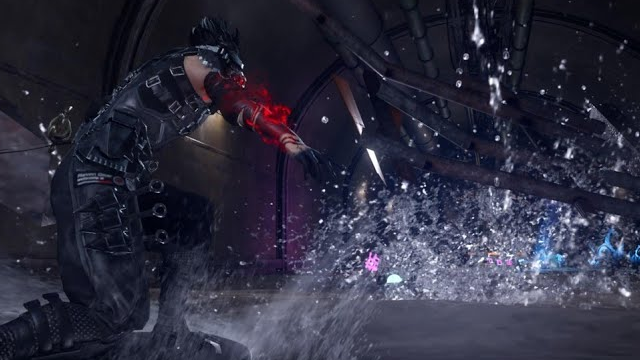
These moments are enjoyable on a first playthrough, but they come at the expense of player freedom. I want to freely engage with the enviroment and combat. This is one of the biggest problems in modern action game where the game frequently takes control away.
Chapters 10 and 11 are good examples of this issue. The extended scripted sequences may be visually impressive, but they overstay their welcome. Instead of building excitement, they disrupt the pacing and make the game feel slower than it needs to be.
What made Ninja Gaiden (2004) so good is the emphasis on player’s agency and freedom to approach or find encounters in your way. It made replayability value so good and gave me a reason to revisit the game if I want to optimize higher score, faster clear..etc.
Meaningful Upgrades
I was always under impression that the moveset were streamlined. Because, Ryu no longer has multiple weapons or string extensions such as Windmill Slash or Fiend’s Bane Kick. Therefore, this was done to avoid overwhelming new players.
It’s hard to differentiate with each weapon’s expression with it’s damage or impact value. Even if you have grounded jump cancels that gives you so much freedom.
There are moves that lack meaningful purpose such as Yakumo’s 360 heavy attack with the dual sword. The Blood Raven / Gleam Gauge is consumed very quickly by weapons like Magatsuhi (Staff/Hammer), yet even a perfectly timed charge offers little payoff. It feels like these mechanics should reward the player with stronger effects, such as an instant delimbed enemy or another high-impact benefit, but instead the reward is underwhelming.
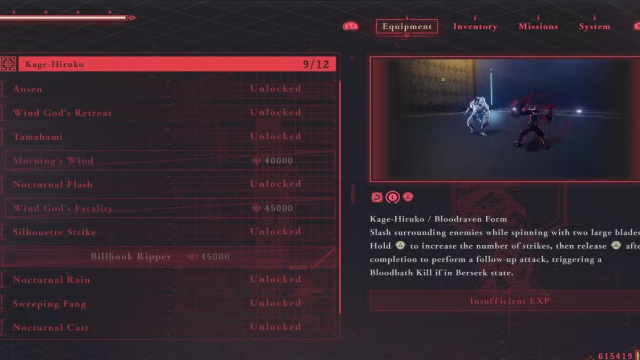
There are no unique hold-heavy combo strings to unlock, and many of the upgrades feel like simple extensions rather than meaningful additions to your moveset. Unless an upgrade grants something significant—such as enabling Bloodbath kills during Berserker State—it rarely changes how you approach combat.
The weapon upgrade system from previous games already gave a good balance with the way that they handled hp and damage output, moveset..etc. It did not need to be replaced with a skill tree. If the goal was to give players a greater sense of progression, then each unlock should have introduced a genuinely meaningful ability or mechanic.
Lack of UT variety
Ninja Gaiden series as a whole is all about reinventing itself between games. While the mechanics evolve from game to game, a few core elements have remained consistent throughout the series: Ultimate Techniques (UT), Obliteration Techniques (OT), the Izuna Drop, Ninpo, and the Flying Swallow.
Argubly UTs are the backbone of Ninja Gaiden’s combat system and they are often misunderstood. A common take is that UTs are “overpowered” or encourages spam. In Truth, there’s a significant difference between repeatedly charging UTs and mixing them skillfully into your combat flow while managing Essence efficiently. In Ninja Gaiden (2004), mastering when and where to use UTs was an important part of developing high-level play.
Ninja Gaiden 4 changed this philosophy considerably. All weapons has standardized UTs and they require direct contact with enemies to be effective. As a result, This might be a departure from previous entries. It’s clear that this decision encourages players to engage more with the game’s new defensive mechanics, such as Fatal Slash, Perfect Dodge, and Offset attacks.
UTs are still valuable because they generate a significant amount of Berserk Gauge, making them an efficient way to access Berserker State. However, as players become more proficient with the game’s expanded combat system, UTs become less of a necessity. They can choose to rely on the new defensive and offensive mechanics instead, making UTs feel more like a resource-building tool than the defining combat mechanic they once were.
That said, I understand the reasoning behind this shift but, I don’t think it was the right direction for the series.
NG4 Bosses
Realistically, Ninja Gaiden 4 boss roster might be the most consistent since Ninja Gaiden (2004). Most of them are mechanically engaging enough to test player’s understanding of the combat system rather than relying on gimmicks.
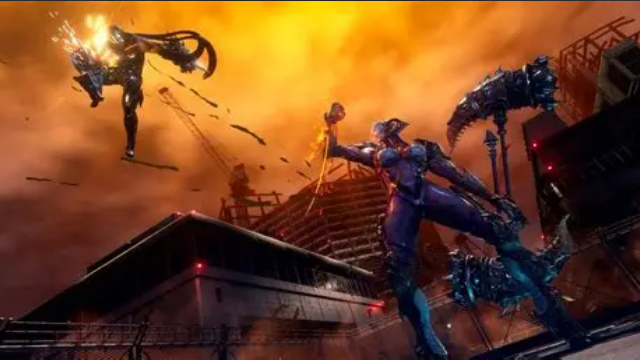
However, it has the same backlash as Devil May Cry 4. Once Ryu’s campaign begins, you’re sent back through previously visited levels with only minor changes. The sense of déjà vu is hard to ignore. Instead of feeling like a meaningful second perspective, it can come across as reused content that slows the momentum established by the first half of the game.
This also affects the boss lineup. Although the individual fights are enjoyable, several bosses are revisited during Ryu’s campaign. Seeing them again diminishes the excitement that comes with encountering a completely new challenge. Rather than ending the game with a series of memorable, fresh encounters, the second half leans too heavily on familiar content.
This criticism is more about the game’s structure than the bosses themselves. The reliance on revisiting earlier stages prevents the experience from reaching the big heights.
Conclusion
This game still delivers one of the strongest combat in the modern action game genre. It tried to capture the intensity and depth that defined Ninja Gaiden. NG4 successfully carves out its own identity instead of simply trying to recreate the past.
Although, many of its design decisions seem to prioritize spectacle and constant engagement over player agency (Part of why I have issues with Platinum games a lot). Auto-scrolling sequences, scripted movement, simplified progression, standardized Ultimate Techniques, and the emphasis on cinematic pacing all contribute to an experience that feels less replayable than its predecessors. These choices make for an exciting first playthrough, but they don’t always reward repeated mastery—the very quality that made Ninja Gaiden (2004), Ninja Gaiden 2 (2008) so enduring.
I respect Team NINJA and PlatinumGames for taking risks instead of playing it safe. Not every experiment lands, but I’d rather see a sequel that tries something new than one that merely repeats the past. Even so, I believe Ninja Gaiden 4 could have struck a better balance between innovation and the core philosophy that made the series special: giving players the freedom to master its systems through replay, experimentation, and skill.
In the end, Ninja Gaiden 4 is a 7 out of 10 game. It stands as a very good action game, yet one that falls just short of becoming a true successor to the design philosophy established by Ninja Gaiden (2004).